

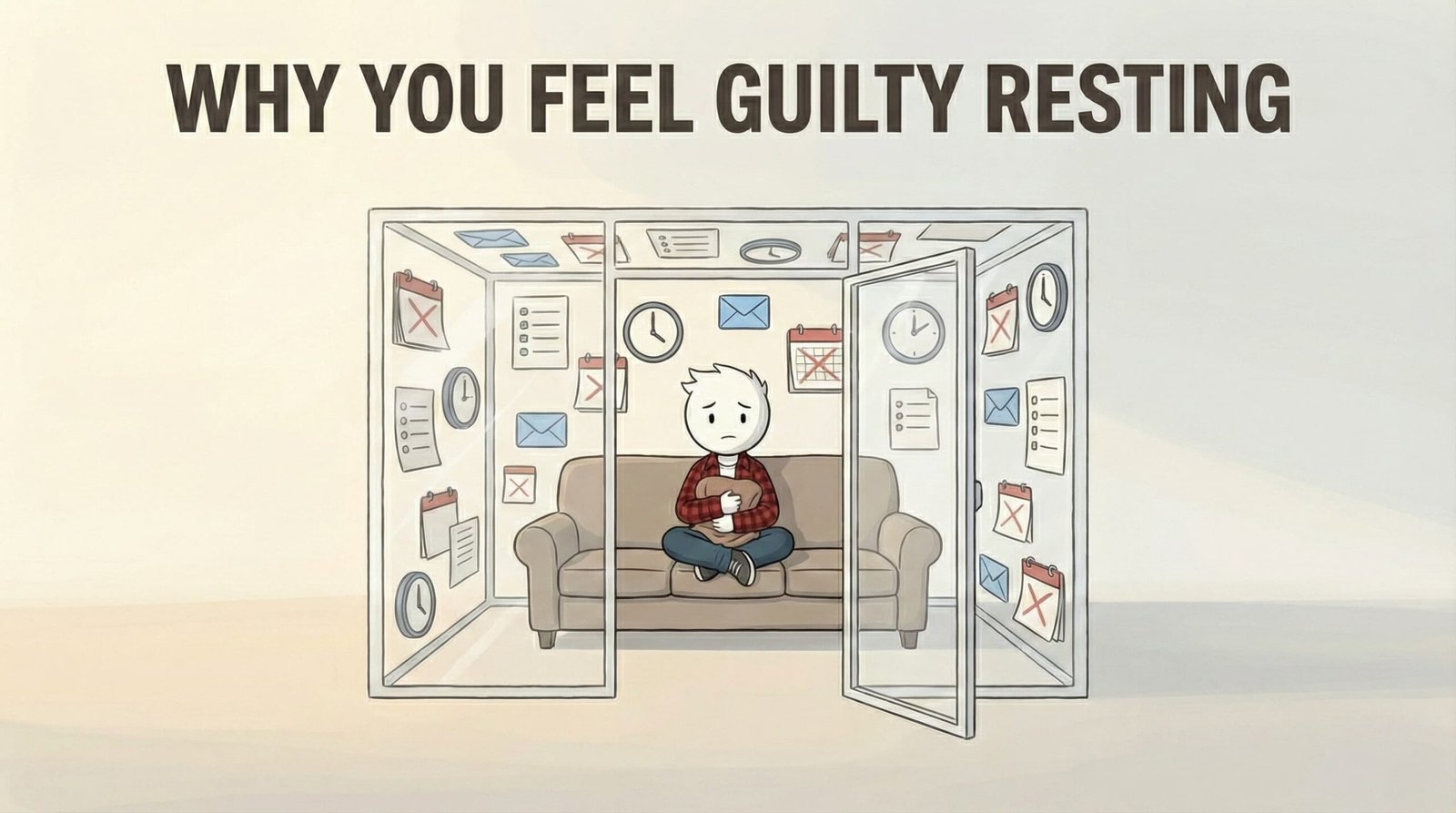
Have you ever felt guilty for taking a nap, enjoying a weekend movie, or even just stepping away from your to-do list? You’re not alone. Many people experience guilt when they relax — even when they’ve earned it. This blog dives into the psychology behind why we feel this way, how societal pressures contribute, and practical ways to reclaim your peace without guilt.
The Guilt of Relaxation: Why It Feels Like a Sin
Relaxation isn’t inherently bad — but for many, it feels like a betrayal of responsibility. We live in a culture that glorifies busyness and equates productivity with worth. When we pause, even briefly, we may internalize the message: “If you’re not working, you’re not enough.”
The Overachiever’s Trap
People who feel guilty for relaxing often identify as “overachievers” or “high performers.” They’ve internalized the belief that rest is a luxury — not a necessity. This mindset can lead to chronic stress, burnout, and even anxiety disorders if left unchecked.
- They equate rest with laziness.
- They believe they should always be “on.”
- They fear being judged for “not doing enough.”
The Guilt of Self-Care
Self-care — whether it’s a bubble bath, a walk in nature, or a favorite snack — often triggers guilt. Why? Because society tells us that caring for ourselves is selfish. We’re conditioned to believe that our needs come after everyone else’s.
“I deserve rest — but I shouldn’t admit it.”
The Roots of Relaxation Guilt: What’s Behind It?
Understanding the psychology behind guilt for relaxing involves unpacking cultural norms, childhood conditioning, and cognitive biases. Here’s what’s really going on:
Cultural Expectations
Modern society prizes productivity, efficiency, and constant output. Social media amplifies this — we’re bombarded with images of people “hustling,” “growing,” or “achieving.” When we don’t match that pace, we feel like failures.
Childhood Conditioning
Many of us learned early on that rest equals laziness — and laziness equals failure. If you were praised for being “hardworking” or scolded for “not trying hard enough,” you likely internalized guilt around rest.
The “Should” Mentality
We’re constantly bombarded with “shoulds”: “You should be productive,” “You should be grateful,” “You should be happy.” These mental anchors make it hard to accept rest as valid — even when our bodies scream for it.
How to Overcome Relaxation Guilt — Without Feeling Like a Failure
Breaking free from guilt around relaxation is possible — and it’s essential for your mental and physical health. Here are practical steps to start:
Reframe Your Mindset
Rest isn’t laziness — it’s recovery. It’s not selfish — it’s self-preservation. Try replacing phrases like “I should be working” with “I deserve to rest.”
Set Boundaries
Learn to say “no” to extra tasks. Protect your time for rest — even if it’s just 10 minutes. Treat it like a non-negotiable appointment with yourself.
Practice Self-Compassion
Be kind to yourself. When guilt creeps in, acknowledge it — then gently remind yourself: “I’m human. I’m allowed to rest.”
Final Thoughts: Rest Is Not a Luxury — It’s a Necessity
Feeling guilty for relaxing isn’t a sign of weakness — it’s a sign you’re trying too hard to please everyone else. It’s time to stop punishing yourself for needing rest. You’re not lazy for taking a break — you’re wise for recognizing your limits. Let yourself rest without shame. Your mind, body, and soul will thank you.